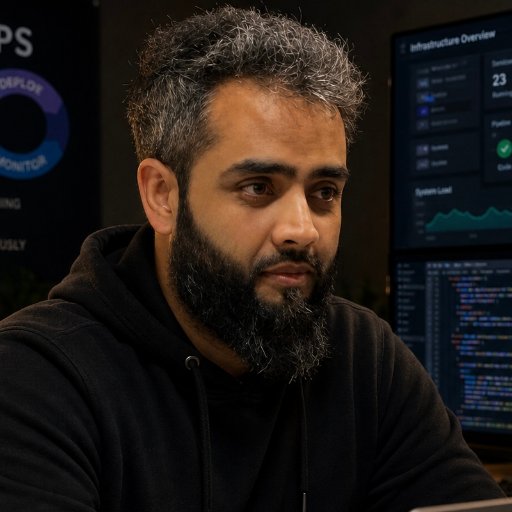
Examine how you investigate.
Use realistic incident simulations to examine how you investigate, practise sampled gaps and compare your performance on a new unseen incident mapped to the same objectives.
Explore the founding betaCloudCaive is where engineers build DevOps and AI-operations skill by doing the work — free drills and browser simulations across Linux, containers, Git, CI/CD, Kubernetes and agentic AI. No experience needed to start. When you are ready to be assessed, a founder-graded Kubernetes incident beta measures how you actually investigate.
New to Kubernetes? Start free in Labs.
$ kubectl get deploy web → 3/3 ready. Users are getting 503s. Where do you look first?
Several explanations look plausible — pick your first move and see what it buys you.
Example only · browser-based simulation · no real or production cluster involved
Short retrieval-practice drills with spaced review, plus terminal simulations where the failure happens to you. Free pathways run from complete beginner to junior-mid; no card, no trial clock.
A worked example of a Labs drill: the learner picks kubectl describe pod and it is marked incorrect; they open the hint, then the primer explaining that a restarted container's earlier output is discarded; they then pick kubectl logs --previous, which is marked correct.
Don’t tell us what you know — show us how you investigate. Capability is built, not claimed.
01 · Diagnose
An unfamiliar incident, investigated your way. Every choice you make is evidence, sampled and reviewed by the founder against a published, versioned rubric. Gaps are named, not hidden.
02 · Practise
Short drills and incident practice aimed at the specific gaps your evidence identified — not a generic course.
03 · Reassess
Same objectives, same standard, different conditions — so the change in your diagnosis is measured, not assumed.
Demonstrated, not demonstrated or insufficient evidence—never an unsupported score.
The founding beta is for UK engineers who already work with Kubernetes and want specific feedback on how they investigate failures. It is capped at 20 engineers.
kubectl workflow;I’m Naqeeb Ghazi, a practising Senior DevOps Engineer and former secondary-school science teacher.
Engineering taught me how failures unfold in real systems. Teaching taught me that useful feedback must be specific: show what someone demonstrated, identify where the reasoning weakened, then give them the right next practice.
During the founding beta, I schedule every session, grade every submission and write every report personally.
Read our story →Use realistic incident simulations to examine how you investigate, practise sampled gaps and compare your performance on a new unseen incident mapped to the same objectives.
Explore the founding betaBuild essential terminology, command-line habits and technical foundations. The free pathways are learning products in their own right—not a trial or teaser.
Try a free drillUK engineers who already work with Kubernetes and are expected to investigate failures with growing independence. The beta is capped at 20 engineers. If you are new to Kubernetes, begin with the free Novice and Fundamentals pathways.
A founder-led incident session, a private report against a published rubric, targeted practice and an unseen reassessment mapped to the same objectives. The core work is designed to remain within approximately 60–90 minutes each week.
No. The incidents are browser-based simulations, not real or production clusters. CloudCaive is not a certification, job guarantee or employer-recognised credential. Your report describes only what the sampled session demonstrated.
Yes. The subscription is £20 per month and you can cancel anytime. Your first payment is covered by a 30-day money-back guarantee. The complete terms are available before you are charged.
Start with a 15-minute fit-check to see whether the founding beta suits the work you do and the feedback you want.